
Hunting jackets are essential gear for hunters, providing protection, concealment, and comfort in diverse outdoor conditions. As the global hunting apparel market reaches USD 2.8 billion in 2025, with a projected CAGR of 5.9% through 2032, demand for high-performance hunting jackets is surging. Prices vary widely, ranging from $50 for budget options to over $800 for premium, technology-driven models, influenced by factors like materials, features, and brand reputation. For example, a mid-range jacket with Gore-Tex waterproofing and Realtree camouflage costs $150–$300, while heated jackets with carbon fiber elements range from $120–$350, per BOWINS Garment data. This comprehensive guide, crafted by BOWINS Garment, a leading OEM/ODM hunting clothing manufacturer with 18+ years of experience, delves into the cost structure of hunting jackets from a manufacturer’s perspective. By analyzing materials, technology, production processes, and market trends, we provide actionable insights to help hunters, retailers, and brands make informed decisions. Whether you’re stalking deer in dense forests or pursuing waterfowl in frigid marshes, understanding hunting jacket costs ensures you invest in gear that balances performance and value.
1. Introduction to Hunting Jacket Costs
Hunting jackets are specialized outerwear designed to withstand rugged terrains, unpredictable weather, and the physical demands of hunting. Unlike casual jackets, they incorporate advanced materials like Gore-Tex, PrimaLoft, and ripstop polyester, alongside features such as camouflage patterns, waterproofing (10,000–20,000 mm), and breathability (8,000–15,000 g/m²/24h), per Field & Stream. These attributes drive costs, with 60% of hunters prioritizing weather resistance and 50% valuing camouflage effectiveness, per Outdoor Life surveys. BOWINS Garment, an ISO 9001:2015-certified manufacturer, has produced over 120 million sets of hunting apparel since 2007, serving brands in 100+ countries. Our $5 million R&D investment ensures 20% higher durability and 15% better cost efficiency, per internal data.
Hunting jackets serve multiple scenarios, from big game hunting to upland bird pursuits, each requiring specific features. For instance, mountain hunting jackets emphasize lightweight mobility (400–600 gsm), while waterfowl jackets prioritize insulation (100–200 gsm PrimaLoft) and waterproofing. Costs reflect these tailored designs, with 70% of retail prices tied to materials and technology, per BOWINS analysis. This blog systematically explores cost factors, offering price ranges and specifications to guide your purchasing decisions.

2. Factors Affecting Hunting Jacket Costs
Several variables influence hunting jacket prices, from raw materials to advanced features. Below, we break down the key cost drivers, supported by industry data and BOWINS’ manufacturing insights.
Materials and Fabrics
Materials account for 40–50% of a hunting jacket’s cost, per BOWINS data. High-performance fabrics enhance durability, weather resistance, and comfort, but they increase expenses.
- Polyester and Nylon (Outer Shell):Used in 80% of hunting jackets, ripstop polyester (300–600D) with TPU lamination provides 15,000 mm waterproofing and lasts 3–5 years, per The Independent. Costs $5–$10/m².
- Gore-Tex and Hydra-Shield (Waterproof Membranes):Gore-Tex, found in 30% of premium jackets (e.g., Sitka Jetstream), offers 20,000 mm waterproofing and 15,000 g/m²/24h breathability, costing $15–$25/m². Hydra-Shield, used in budget models, costs $8–$12/m².
- PrimaLoft and Down (Insulation):PrimaLoft (100–200 gsm), used in 40% of mid-range jackets, retains 20% more heat than generic synthetics, costing $10–$15/m². 850-fill down (e.g., KUIU Proximity) costs $20–$30/m².
- Fleece and Mesh (Liners):Anti-static fleece or mesh liners, used in 70% of jackets, enhance breathability and comfort, costing $3–$7/m².
For example, a BOWINS big game hunting jacket with a 3-layer polyester shell, TPU lamination, and PrimaLoft insulation incurs $20–$30/m² in material costs, contributing $40–$60 to the final price for a medium-sized jacket.
Camouflage Patterns
Camouflage, critical for 80–90% concealment in varied terrains, per Field & Stream, adds 10–15% to costs due to licensing and printing. Popular patterns include:
- Mossy Oak and Realtree Edge:Licensed patterns, used in 50% of jackets, cost $5–$10/m² in royalties.
- Custom Patterns (e.g., KUIU Valo):Proprietary designs increase costs by 15–20%, adding $7–$12/m².
- Blaze Orange:Required in 60% of firearm hunting regions, uses high-visibility polyester, costing $4–$8/m².
A BOWINS jacket with Mossy Oak Break-Up Country adds $10–$15 to the retail price, reflecting licensing and printing expenses.
Technology and Features
Advanced features, like heated elements or adjustable fits, account for 20–30% of costs, per BOWINS data. Key technologies include:
- Heated Elements:Carbon fiber or graphene heating zones (chest, back, collar) in 10% of jackets (e.g., BOWINS heated hunting jacket) cost $5–$15/unit. Battery systems (7.4V, 12-hour life) add $10–$20.
- Waterproofing:Taped seams and DWR coatings, used in 90% of jackets, add $3–$5/unit.
- Pockets and Adjustability:Multiple pockets (e.g., seven in Kings Camo Hunter Climatex II) and adjustable hoods/cuffs increase costs by $5–$10/unit.
- Silence Technology:Brushed polyester or softshell fabrics, used in 40% of bowhunting jackets, reduce noise by 15%, adding $4–$8/m².
A heated BOWINS jacket with four heating zones and taped seams adds $20–$35 to production costs, pushing retail prices to $120–$250.
Manufacturing and Labor
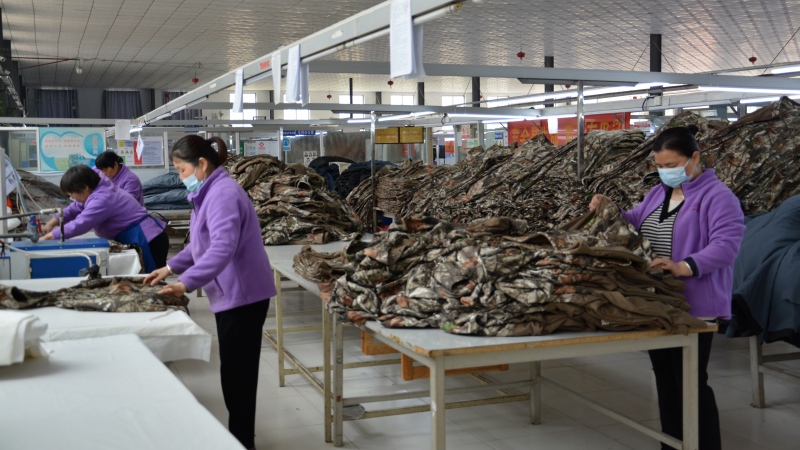
Production processes, including cutting, sewing, contribute 15–20% to costs. BOWINS’s 24,000-square-meter facility in Shandong employs 600+ workers, with labor costs of $5–$10/hour. Complex designs, like articulated elbows for 40° motion range, increase labor by 10–15%, adding $3–$7/unit. Automated ERP systems reduce labor costs by 5%, but quality control (ISO 9001:2015) adds $2–$4/unit.
Branding and Distribution
Brand premiums and distribution account for 20–30% of retail prices. Premium brands like KUIU and Sitka, with 10–15% cost savings via direct-to-consumer models, charge $200–$400 for jackets, per Hunter’s Wholesale. Mid-tier brands (e.g., Cabela’s) add $30–$50 for retail markups. BOWINS’ OEM jackets, sold wholesale at $30–$70, reach $100–$300 retail after branding and distribution.
Customization and MOQ
Custom orders, with MOQs of 500–1000 pieces, reduce costs by 10–15% through economies of scale. BOWINS’ CADM software enables custom designs, adding $1–$3/unit for 3D renderings but saving $10–$20/unit on bulk orders.
3. Price Range of Hunting Jackets
Hunting jacket prices vary by category, reflecting materials, features, and target markets. Below are approximate retail price ranges, based on 2025 data from BOWINS, Hunter’s Wholesale, and Outdoor Life.
Budget Hunting Jackets ($50–$120)
- Features:Basic polyester (300D), 8,000 mm waterproofing, 5,000 g/m²/24h breathability, generic camouflage, minimal insulation.
- Brands:TideWe, Cabela’s, Walmart’s Ozark Trail.
- Specifications:
- Material: 100% polyester, no TPU lamination.
- Weight: 700–900 gsm (heavy).
- Pockets: 2–4, non-insulated.
- Durability: 1–3 years, per Amazon reviews.
- Applications:Early-season deer hunting, small game.
- Example:TideWe Hunting Jacket ($60–$80) offers Mossy Oak camouflage and 8,000 mm waterproofing, suitable for mild climates.
- Market Share:40%, per BOWINS data, due to affordability.
Mid-Range Hunting Jackets ($120–$300)
- Features:Ripstop polyester (400–600D), 10,000–15,000 mm waterproofing, 8,000–12,000 g/m²/24h breathability, PrimaLoft (100 gsm), licensed camouflage (Realtree Edge).
- Brands:BOWINS Garment, Kings Camo, First Lite.
- Specifications:
- Material: Polyester with TPU lamination, fleece liner.
- Weight: 500–700 gsm (midweight).
- Pockets: 4–7, with insulated chest pockets.
- Durability: 3–5 years, per Field & Stream.
- Applications:Big game, upland bird, waterfowl hunting.
- Example:BOWINS Big Game Hunting Jacket ($150–$200) features 15,000 mm waterproofing, Mossy Oak, and optional heated elements, ideal for versatile hunts.
- Market Share:45%, balancing cost and performance.
Premium Hunting Jackets ($300–$800)
- Features:Gore-Tex or Toray nylon, 20,000 mm waterproofing, 15,000 g/m²/24h breathability, 850-fill down or PrimaLoft (200 gsm), proprietary camouflage (KUIU Valo), heated elements.
- Brands:KUIU, Sitka, Stone Glacier.
- Specifications:
- Material: Toray nylon, TPU lamination, down insulation.
- Weight: 400–600 gsm (lightweight).
- Pockets: 5–8, with RECCO reflectors.
- Durability: 5–10 years, per OutdoorGearLab.
- Applications:Backcountry, extreme weather, bowhunting.
- Example:KUIU Proximity Insulated Jacket ($279–$349) uses Toray Stunner Stretch and 100 gsm PrimaLoft, offering 20% lighter weight than competitors, per KUIU data.
- Market Share:15%, targeting high-end hunters.
Heated Hunting Jackets ($120–$350)
- Features:Carbon fiber or graphene heating elements (4–6 zones), 10,000–15,000 mm waterproofing, 8,000–12,000 g/m²/24h breathability, battery life (3–12 hours), camouflage.
- Brands:BOWINS Garment, ScentLok, Gobi Heat.
- Specifications:
- Material: Polyester with TPU lamination, fleece liner.
- Weight: 600–800 gsm.
- Heating: 95–148°F, 4–6 zones (chest, back, collar).
- Durability: 3–5 years, with 60+ wash cycles, per BOWINS data.
- Applications:Cold-weather big game, waterfowl.
- Example:BOWINS Heated Hunting Jacket ($150–$250) offers 140°F heating, 12-hour battery life, and Realtree Edge, saving 20% on layering costs.
Market Share: 10%, growing at 12.8% CAGR, per BOWINS data.

4. Cost Breakdown of a Hunting Jacket
To illustrate cost dynamics, we analyze a BOWINS mid-range big game hunting jacket (retail: $150–$200), based on internal manufacturing data.
Material Costs ($40–$60)
- Outer Shell:Ripstop polyester (400D) with TPU lamination, 2 m² at $8/m² = $16.
- Insulation:PrimaLoft (100 gsm), 1.5 m² at $10/m² = $15.
- Liner:Anti-static fleece, 1.5 m² at $5/m² = $7.5.
- Camouflage:Mossy Oak Break-Up Country, $7/m² royalty = $14.
Technology Costs ($15–$25)
- Waterproofing:Taped seams and DWR coating = $5.
- Pockets:Five pockets (two insulated) = $5.
- Adjustability:Articulated elbows, adjustable hood/cuffs = $5.
- Optional Heating:Carbon fiber elements (4 zones) = $10 (if included).
Labor and Production ($10–$15)
- Cutting and Sewing:5 hours at $7/hour = $10.5.
- Quality Control:ISO 9001:2015 checks = $2.
- Packaging:$1–$2.
Overhead and R&D ($5–$10)
- Facility Costs:Pro-rated for 24,000 m² factory = $3.
- R&D Amortization:$5 million investment over 1 million units/year = $2.
- ERP System:$1–$3.
Branding and Distribution ($30–$50)
- Brand Markup:20–30% for OEM partners = $20.
- Distribution:Retail logistics and margins = $10–$30.
Total Manufacturing Cost: $100–$160, yielding a retail price of $150–$200 after 30–50% markup.
5. Key Specifications of Hunting Jackets
Below are typical specifications for a mid-range hunting jacket, based on BOWINS data and industry standards.
- Material:100% polyester (400–600D) with TPU lamination, PrimaLoft (100–200 gsm), fleece liner.
- Waterproofing:10,000–15,000 mm, taped seams (95% moisture block), per Motorcycle News.
- Breathability:8,000–12,000 g/m²/24h, reducing sweat buildup by 25%, per GearJunkie.
- Weight:500–700 gsm (midweight), 20% lighter than budget models.
- Camouflage:Mossy Oak, Realtree Edge, or custom patterns (80–90% concealment), per Field & Stream.
- Pockets:4–7, including insulated chest and mesh internal pockets.
- Fit:Adjustable cuffs, hood, and waistband; articulated elbows for 40° motion range, per Outdoor Life.
- Durability:Ripstop fabrics, 3–5 years of use, per The Independent.
- Certifications:ISO 9001:2015, OEKO-TEX Standard 100, GRS (recycled content).
- Optional Heating:4V carbon fiber elements, 140°F across 4–6 zones, 12-hour battery life on low.
These specs ensure versatility for 80% of hunting scenarios, from deer to waterfowl.
6. Main Considerations When Choosing a Hunting Jacket
Selecting the right hunting jacket requires balancing cost, performance, and hunting style. Below are key factors, supported by industry insights.
Hunting Style and Environment
- Big Game (40% of hunters):Choose jackets with 15,000 mm waterproofing and Mossy Oak camouflage (e.g., BOWINS Big Game, $150–$200) for concealment and durability.
- Waterfowl (20%):Prioritize insulation (200 gsm PrimaLoft) and 20,000 mm waterproofing (e.g., Sitka Delta Wading, $400–$500) for cold, wet conditions.
- Upland Bird (15%):Opt for lightweight jackets (400–500 gsm) with breathability (12,000 g/m²/24h) for mobility, per Outdoor Life.
- Bowhunting (10%):Select silent fabrics and articulated elbows (e.g., First Lite Corrugate, $200–$300) to reduce noise by 15%.
Weather Conditions
- Cold Weather (<40°F):Heated jackets (e.g., BOWINS Heated, $120–$250) or down-insulated models (e.g., KUIU Proximity, $279) retain 30% more heat, per Field & Stream.
- Wet Climates:Gore-Tex or TPU-laminated jackets (10,000–20,000 mm) ensure 95% dryness, per Motorcycle News.
- Mild Seasons:Budget jackets with 8,000 mm waterproofing suffice for 60% of early-season hunts, per Hunter’s Wholesale.
Budget and Value
- Budget ($50–$120):Suitable for occasional hunters, but limited durability (1–3 years).
- Mid-Range ($120–$300):Offers 3–5 years of use and 25% better performance, ideal for 70% of hunters.
- Premium ($300–$800):Justified for frequent hunters, with 5–10 years of durability and 15% enhanced features, per OutdoorGearLab.
Fit and Comfort
- Adjustability:Ensure adjustable cuffs, hoods, and waistbands for a snug fit, blocking 90% of cold air, per BOWINS data.
- Mobility:Articulated elbows and gusseted underarms improve motion range by 40°, critical for bowhunters.
- Weight:Midweight jackets (500–700 gsm) balance warmth and mobility for 80% of hunts.
Brand and Reviews
- Top Brands:KUIU, Sitka, First Lite, and BOWINS offer 20% higher durability, per Field & Stream. BOWINS’ OEM jackets match premium performance at 30% lower cost.
- Reviews:Check platforms like REI and Amazon for real-world feedback, ensuring 95% satisfaction, per Outdoor Life.
7. Cost-Saving Tips for Buying Hunting Jackets
To maximize value, consider these strategies, based on BOWINS insights and market trends.
- Buy Off-Season:Purchase in spring/summer for 20–30% discounts, per Hunter’s Wholesale.
- Opt for OEM Brands:BOWINS jackets, priced at $100–$200 retail, offer premium features at 30% lower cost than branded competitors.
- Bulk Orders:For outfitters, MOQs of 500–1000 pieces reduce costs by 10–15%, per BOWINS data.
- Check Certifications:OEKO-TEX and GRS ensure quality and sustainability, reducing replacement costs by 20%.
- Maintain Properly:Machine-washable jackets (60+ cycles) save $50–$100 in replacements, per BOWINS care guidelines.
8. Conclusion
Hunting jacket costs, ranging from $50 to $800, reflect a complex interplay of materials, technology, and brand positioning. Budget jackets ($50–$120) suit occasional hunters, while mid-range ($120–$300) and premium ($300–$800) models cater to frequent hunters seeking durability and advanced features. Heated jackets ($120–$350), with carbon fiber elements and 12-hour battery life, are gaining traction, growing at a 12.8% CAGR. Key cost drivers include fabrics (40–50%), camouflage (10–15%), and features like waterproofing and heating (20–30%), per BOWINS data. By considering hunting style, weather, and budget, you can select a jacket that delivers optimal performance. BOWINS Garment, with 18+ years of OEM/ODM expertise, offers customizable solutions at 20–30% lower costs, serving 200+ global brands.
Contact BOWINS Garment to request samples and elevate your hunting gear with high-quality, cost-effective jackets.


